
In today’s buildings—whether it’s a corporate office, retail chain, or industrial facility—security is no longer about installing separate systems and hoping they work together.
From experience across multiple projects, one thing becomes clear very quickly:
standalone systems create gaps, while integrated systems create clarity.
CCTV cameras record events. Access control systems manage who enters. Alarm systems react to incidents. But when these systems operate independently, critical information is often fragmented.
That’s why more businesses are now investing in CCTV and access control integration for businesses — not just to improve security, but to build a smarter, more efficient infrastructure. At CL ELECTRIC, this approach is at the core of how integrated systems are designed—from initial planning to full deployment.
Why Standalone Security Systems Fall Short
It’s still common to see buildings where:
- Cameras operate on one platform
- Access control runs on another
- Alarms trigger separately
At first glance, everything seems fine. But problems appear when something actually happens.
For example:
- A door is forced open — but there’s no automatic link to video footage
- An employee badge is used — but no visual verification exists
- An alarm triggers — but security must manually search for related footage
This slows down response time and increases the risk of human error.
In real-world scenarios, delays of even a few minutes can make a significant difference.
What Integration Actually Means
Integration connects three key layers of security:
- Identity (Access Control) — who entered
- Activity (Alarms & Events) — what happened
- Verification (CCTV) — visual confirmation
When properly designed, these systems work as a single ecosystem.
Instead of switching between platforms, security teams can:
- Click an access log → instantly view video
- Receive an alarm → see live footage immediately
- Track events → understand the full context
This is not just convenience—it’s operational efficiency.
How Integrated Security Systems Work
Behind the scenes, integration is not just about connecting devices—it’s about designing a structured system.
From a technical perspective, a reliable setup always includes several layers.
1. Device Layer
This includes:
- IP cameras
- Card readers and biometric devices
- Motion sensors and alarms
These are the “eyes and ears” of the system.
2. Network Layer
Everything depends on a stable network:
- Structured cabling
- PoE switches
- Secure VLAN configuration
This is often underestimated, but in practice, network quality directly impacts system performance.
That’s why proper security system architecture and integration always starts with a solid low-voltage and networking foundation.
3. Platform Layer
This is where systems come together:
- Video Management System (VMS)
- Access control software
- Alarm management interface
These platforms collect and organize data from all devices.
4. Integration Layer
This is the “brain” of the system:
- APIs connect platforms
- Events are synchronized
- Rules and automation are configured
For example:
- “If door opens after hours → trigger alert + show camera feed”
5. User Interface
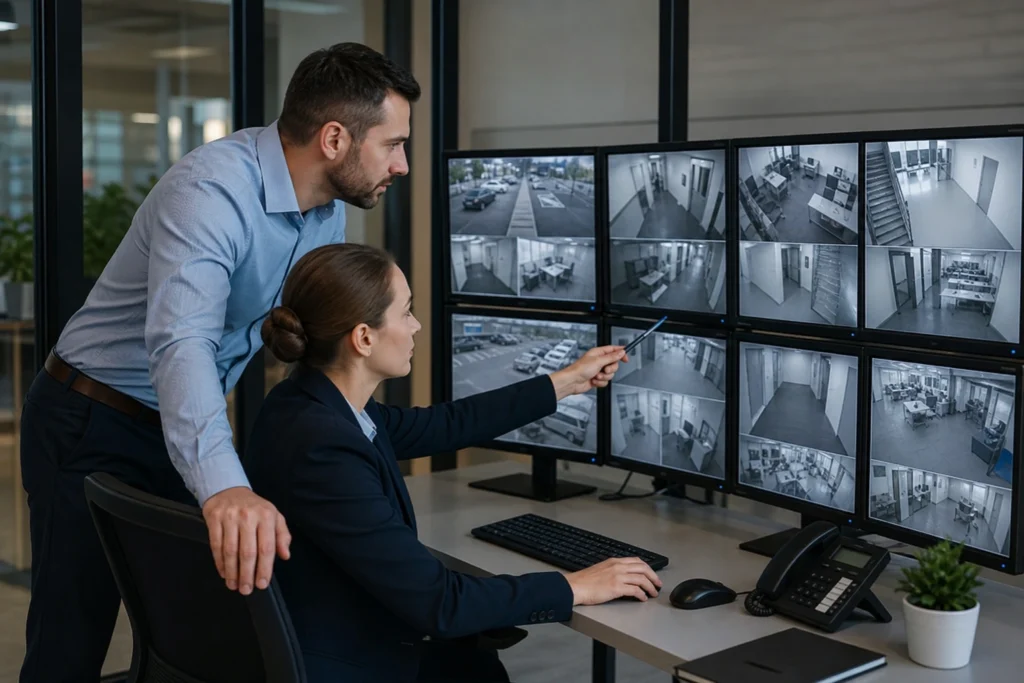
Finally, everything is presented in:
- dashboards
- control room displays
- mobile apps
This is where usability matters most.
Key Benefits for Businesses
From experience, companies rarely invest in integration just for “better security.”
They do it because it improves operations.
1. Faster Incident Response
Instead of investigating manually, teams get instant context:
- who accessed
- what happened
- video proof
2. Reduced Operational Costs
Integrated systems reduce the need for:
- manual monitoring
- multiple operators
- redundant systems
3. Centralized Control
For multi-site businesses, this is critical:
- manage multiple locations from one platform
- standardize security processes
4. Better Compliance & Reporting
Integrated logs provide:
- full event history
- visual verification
- audit-ready records
5. Scalability
Well-designed systems grow with the business:
- new locations
- additional devices
- expanded automation
Real-World Use Cases
Integration becomes especially valuable in complex environments.
Corporate Offices
- Restricted access zones
- Employee tracking
- Meeting room monitoring
Retail Chains
- Theft prevention
- POS integration
- multi-location management
Warehouses & Logistics
- perimeter security
- vehicle tracking
- controlled loading zones
Data Centers
- multi-layer authentication
- 24/7 monitoring
- strict compliance requirements
Common Mistakes in Security Integration
Many systems fail not because of technology—but because of poor design.
Typical issues include:
- treating systems as separate installations
- weak network infrastructure
- no centralized platform
- lack of automation rules
In practice, fixing these later is far more expensive than designing correctly from the start.
Beyond Security: Smart Building Integration
This is where things get more interesting.
Modern buildings are no longer just “secured”—they are automated and connected.
Security systems can now interact with:
- lighting
- HVAC systems
- meeting room controls
For example:
- Access granted → lights turn on
- After-hours access → restricted zones activated
- Alarm triggered → building lockdown initiated
This is where smart building security integration becomes a strategic advantage rather than just a technical feature.
Designing a Future-Ready System
A well-integrated system is not just about today’s needs.
From experience, the best results come from planning for:
- Scalability — adding devices and locations
- Reliability — redundancy and uptime
- Cybersecurity — protecting networked systems
- Interoperability — compatibility between platforms
Choosing the right architecture early on prevents costly redesign later.
From Systems to Infrastructure
There’s an important shift happening in the industry.
Businesses are no longer asking:
“Which cameras should we install?”
They’re asking:
“How do we design a system that works together?”
This changes everything.
Security becomes part of a larger ecosystem that includes:
- IT infrastructure
- automation
- data systems
And that’s where system integration makes the biggest difference.
Final Thoughts
Integrated security systems are no longer optional for modern businesses—they are essential.
By connecting CCTV, access control, and alarm systems into one unified platform, organizations gain:
- better visibility
- faster response
- improved efficiency
But most importantly, they move from reactive security to intelligent infrastructure.
And in today’s environment, that’s what truly sets a business apart.
Thinking About Integration?
If you’re exploring ways to improve your security systems or planning a new space, it may be worth looking at how everything can work together from the start.
At CL ELECTRIC, the focus is on designing systems that are not only functional, but seamlessly integrated.
You can explore turnkey system integration solutions or simply reach out to discuss your project and see what approach would make the most sense for your space.
Commercial installation services in Calgary
Planning a project for your business? Explore our commercial security camera installation, card and key fob access control, and structured cabling and network services for Calgary premises.