
The first branch has a camera system that the manager understands. The second uses a different app. By the fifth location, a simple request to remove a former employee’s access can turn into several phone calls.
For a business operating across Canada, the useful goal is consistent operation: knowing who can enter, who can review an incident and who owns each change. Buying the same equipment for every address is only part of that job.
Separate the company standard from the site design
Set a common standard for naming doors and cameras, assigning administrator permissions, recording changes and handing over documentation. Then survey each site on its own terms. A street-level office, a loading dock and a shared commercial entrance cannot be treated as identical openings.
Create a short site record containing the floor plan, current equipment, door hardware, available network connections and local contact. Mark any equipment that must remain in service. This gives the project team a way to identify exceptions before ordering hardware.
Write down three ordinary tasks
Choose tasks that expose whether the proposed system fits your business. For example:
- A regional manager needs access to two branches for one week.
- A local supervisor needs to review an incident at their own site.
- An employee leaves and their access must be removed from every relevant location.
For each task, name the person who requests it, the person who approves it and the person who carries it out. Use individual accounts and give people the access their role requires. Shared administrator credentials make responsibility harder to trace.
Also decide who maintains the records when a branch changes managers. A good installation should not depend on one employee remembering how everything was set up.
Ask what happens when the connection is lost
Do not assume all systems behave the same way during an internet interruption. Ask the supplier to document which functions continue locally, which require a connection and how records are handled after service returns. Have the proposed behaviour demonstrated before choosing the design.
Door operation needs its own qualified review, including the existing hardware and safety requirements. A network outage test is not a substitute for that review. Agree a test procedure that protects normal site operation.
Choose a pilot that reveals the difficult parts
The easiest branch is not always the best pilot. A representative site might include a staff entrance, a visitor door, an older camera and a manager who needs remote access. Resolve these conditions once before repeating the installation.
Use a written acceptance list. Check the actual camera scenes, normal staff access, time-limited access, account permissions and the process for retrieving an incident. Record unresolved items and assign an owner. Do not roll an unresolved configuration issue into the next ten locations.
Budget for the operating model
Compare proposals over the period you expect to use the system. Alongside installation, ask about software subscriptions, storage, user or device licences, connectivity and support. Identify what changes when you add a new location or replace a device.
For geographically dispersed sites, separate remote assistance from physical attendance. Record the agreed support hours, escalation contact and arrangements for an onsite visit. This matters more than a vague promise of nationwide coverage.
Make handover repeatable
Each location should have a usable record of installed devices, names, drawings, acceptance results and outstanding items. Transfer administrator access through a secure process and identify the business owner responsible for future changes. Keep sensitive configuration details out of general staff documents.
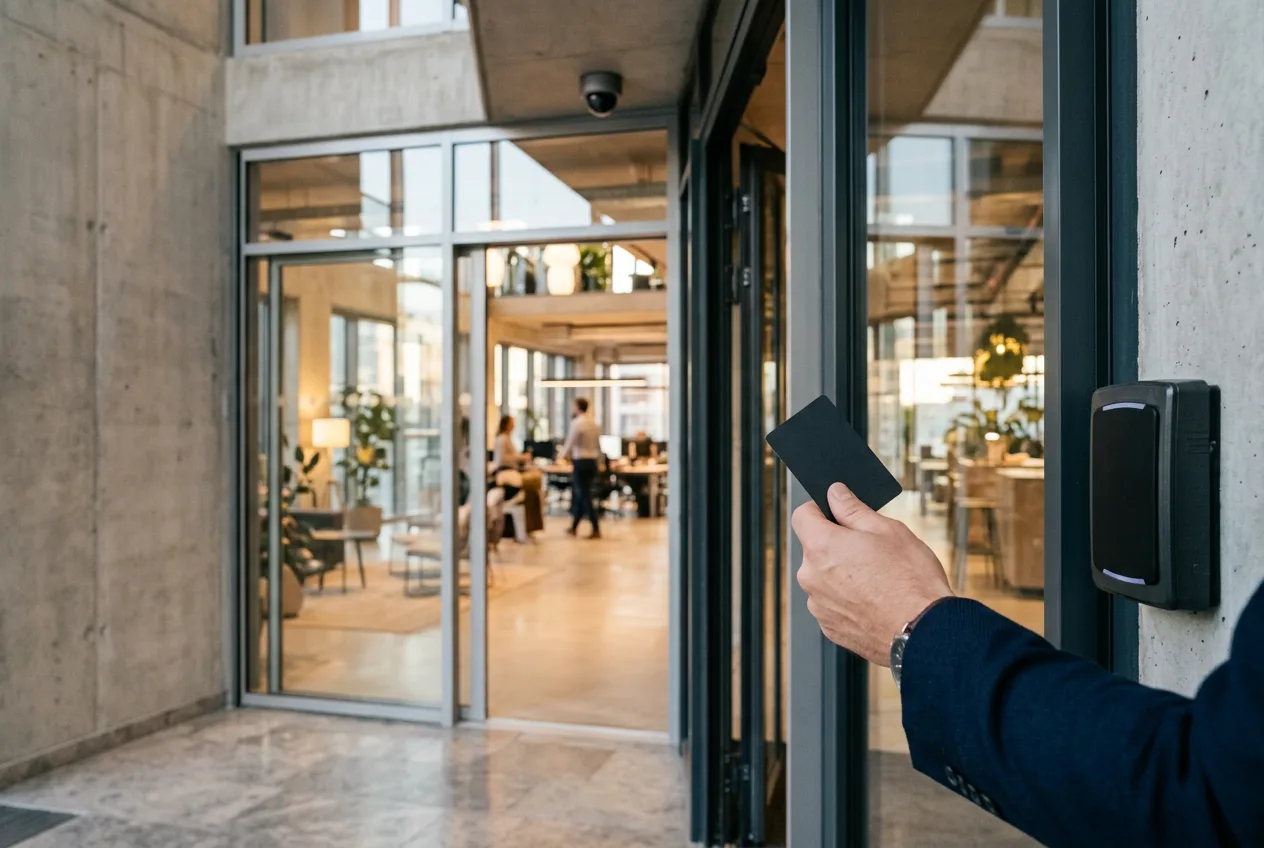
Our office access-control and video-intercom project illustrates related previous team experience before CL ELECTRIC’s Canadian operations. The scope of a new rollout is defined for its own buildings and users.
Plan your rollout with CL ELECTRIC
CL ELECTRIC is based in Calgary and works with commercial clients across Canada. Start with the number of locations, their cities, existing camera and door systems, and the tasks you want to manage consistently.
Explore commercial systems integration across Canada, access-control services and camera installation, or discuss a pilot location.